A Maxwell Leadership Mastermind Programme
It's About Time
A 12-session hope-informed mastermind for people ready to stop managing urgency and start choosing a more meaningful life
Distinguish what is truly meaningful from what merely feels urgent
Break free from chronic busyness, time poverty, and overload
Reclaim attention from technology, distraction, and multitasking
Challenge expectations that keep you overcommitted
Recognise the strengths that may be quietly stealing your time
Create more room for relationships, rest, and purpose
Build a realistic time budget aligned with what matters most
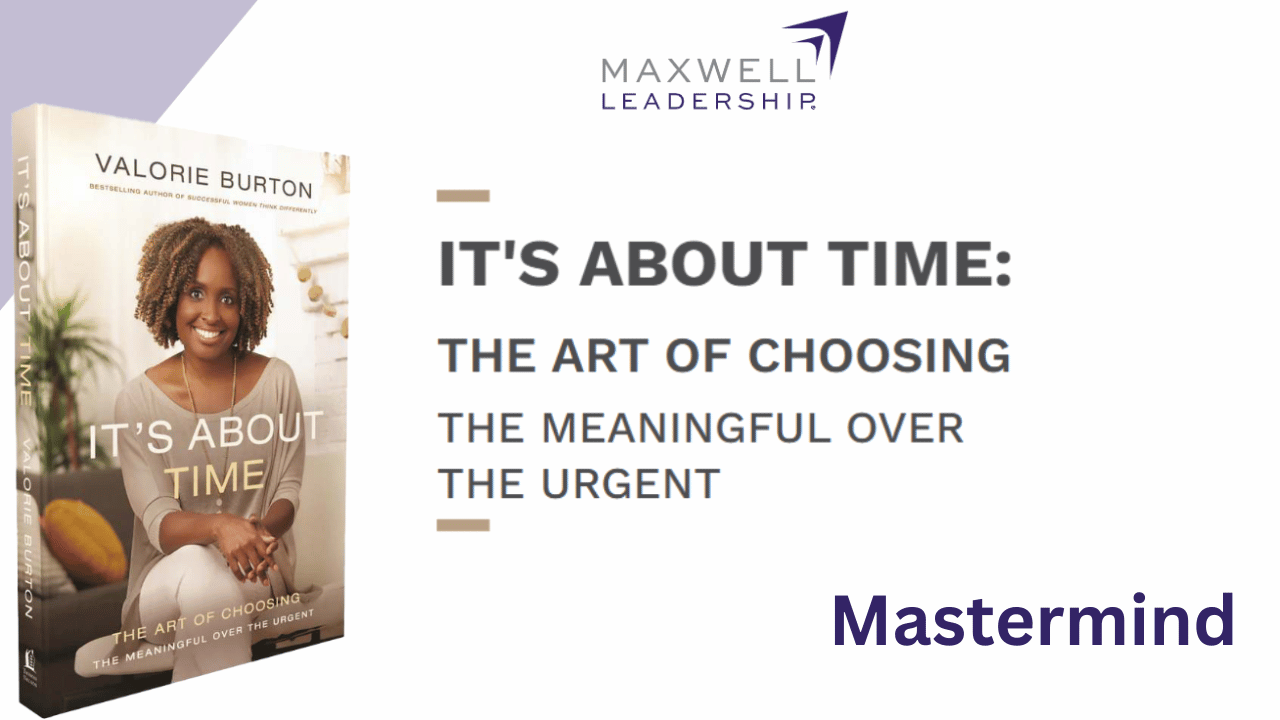
Programme overview
It’s About Time is a licensed 12-session mastermind based on the work of Valorie Burton. It helps participants examine how modern expectations, technology, busyness, pressure, and personal habits influence the way they use their limited time.
The programme is built around an important distinction: not everything that feels urgent is meaningful, and not everything meaningful will demand our attention loudly.
Participants are guided to reflect on whether their schedules genuinely align with their values, relationships, purpose, well-being, and the contribution they hope to make. Rather than focusing only on productivity or trying to fit more into already crowded days, the programme encourages participants to make wiser and more intentional choices about what deserves their time.
The journey explores time poverty, digital distraction, external expectations, regret over lost time, personal strengths that become vulnerabilities, the value of pausing, and the importance of creating a realistic time budget.
The facilitator guide presents this as a 12-session journey supported by reading, facilitated group discussion, personal reflection, practical application, and shared accountability.
Programme Purpose
The purpose of this mastermind is to help participants:
- Recognise where constant busyness has become an unhealthy norm
- Distinguish genuine priorities from false urgency
- Align their schedules more closely with their values and purpose
- Identify time poverty and attention or bandwidth poverty
- Examine unrealistic expectations of themselves and others
- Reduce the influence of social comparison and external pressure
- Establish healthier boundaries around technology
- Regain focus, presence, and capacity for deeper thinking
- Process regret and make peace with time that cannot be recovered
- Identify the habits that quietly steal meaningful time
- Understand how personal strengths may become time-management vulnerabilities
- Build a more realistic relationship with planning and deadlines
- Create room for rest, relationships, creativity, faith, and personal well-being
- Design a meaningful and sustainable time budget
Programme Format
Duration: 12 sessions
Session length: Approximately 60 to 90 minutes
Delivery: Online
Format: Facilitated small-group mastermind
Core content: Licensed Maxwell Leadership material based on Valorie Burton’s It’s About Time
Each session may include:
- Reflection on the previous session’s application
- Exploration of the assigned chapter
- Facilitated group dialogue
- Personal time and lifestyle reflection
- Faith-informed and purpose-centred questions
- Practical application exercises
- A meaningful action commitment
- Reading in preparation for the next session
The programme encourages participants to be committed, punctual, present, encouraging, willing to add value, and open to learning from the experiences of other members.
The 12-Session Journey
Session 1: The New Normal Is Not Normal
The opening session challenges the assumption that constantly living without breathing room should be accepted as normal.
The session introduces the idea that time demands are unequal. Participants are encouraged to ask whether what feels urgent today will still be significant tomorrow, next year, or ten years from now.
The goal is not simply to become more efficient, but to choose what is worthy of one’s time.
Session 2: Is It Ever Enough?
This session explores the expectations that keep people overcommitted and dissatisfied.
Participants identify expectations they may need to adjust, reject, or redefine.
Session 3: Time Poor, Tech Bloated
This session focuses on technology’s double effect: it can save time while simultaneously consuming attention, energy, and meaningful connection.
Participants identify practical limits, stopping cues, technology-free periods, and accountability structures that may help them regain control of their attention.
Session 4: The Big Room
This session examines how expanding wealth, technology, opportunity, and consumption have changed the way people use their time.
This session invites participants to question whether greater convenience and material abundance have actually produced greater freedom.
Session 5: How Changing Times Have Changed Our Time
Participants explore how economic, social, and family changes have reshaped the experience of time.
Participants reflect on how their own life story has been shaped by contemporary norms around work, debt, achievement, opportunity, and consumption.
Session 6: Making Peace with Lost Time
This session addresses regret, grief, pressure, and the emotional sting of time that cannot be recovered.
Participants revisit where time is currently being lost and identify a more meaningful choice for the season ahead.
Session 7: If You Had the Time…
This session moves from reclaiming time to deciding what that time is for.
Participants identify meaningful ways to use reclaimed time and begin moving towards activities that reflect purpose rather than habit.
Session 8: The Power of a Positive Pessimist
This session examines optimism as both a strength and a possible time-management risk.
Participants explore the idea of tidsoptimism, or time optimism: the tendency to believe there is more time available than reality permits.
The aim is not to become negative. It is to combine hope with realism, wisdom, and responsible preparation.
Session 9: Beauty Is the Beast
This session helps participants understand how some of their most admired strengths may also create time pressure and unhealthy patterns.
The facilitator guide identifies six core vulnerabilities.
Participants identify both the “beauty” and the “beast” within their strengths and consider how to use those strengths more wisely.
Session 10: Press Pause
This session focuses on the value of intentionally stopping before choosing, reacting, or committing.
Participants identify practical ways to create moments of stillness and reflection before making decisions about their time.
Session 11: Temperament to Experiment
This session encourages participants to stop searching for a perfect universal system and instead experiment with what genuinely works for their season, responsibilities, and temperament.
The application invites participants to try a meaningful time experiment and observe its effect on their work, family, close relationships, faith, and wider purpose.
Session 12: Best Budget Ever
The final session introduces the idea that time, like money, requires a deliberate budget.
The final goal is not to control every minute. It is to ensure that time is spent in a way that reflects what the participant says matters most.
Key Themes Explored
Across the 12 sessions, participants explore:
- Meaningful versus urgent
- Time poverty
- Attention and bandwidth poverty
- Cultural and social expectations
- Technology and distraction
- Busyness and personal worth
- Work, wealth, and consumption
- Contentment and gratitude
- Regret and lost time
- Purpose, dreams, and legacy
- Procrastination and perfectionism
- Time optimism
- Boundaries and over-responsibility
- Rest, pause, and reflection
- Personal temperament
- Time budgeting and stewardship
What Participants Can Expect to Gain
Participants may develop:
- Greater awareness of where their time is going
- A clearer understanding of what is meaningful to them
- Improved ability to distinguish genuine urgency from false urgency
- Healthier expectations of themselves and others
- Increased confidence to say no
- More intentional technology habits
- Stronger focus and presence
- Reduced overcommitment
- Better boundaries around work and availability
- Greater awareness of personal time-management vulnerabilities
- More realistic planning habits
- Increased alignment between their schedule, faith, values, and purpose
- A practical time budget for the season ahead
- Greater permission to rest, pause, reflect, and live meaningfully
Who Should Attend?
This mastermind may be especially valuable for:
- Leaders and managers carrying extensive responsibility
- Professionals working in demanding or deadline-driven environments
- Accountants, auditors, and other professionals in peak seasons
- Business owners and entrepreneurs
- Parents balancing work and family commitments
- Individuals who feel constantly busy or overwhelmed
- People struggling with digital distraction
- High achievers who equate productivity with personal worth
- Professionals facing burnout or ongoing time pressure
- People wanting to strengthen their faith-based stewardship of time
- Individuals seeking healthier rhythms of work, rest, relationships, and purpose
Got any questions? You are welcome to contact Lynette Berger at [email protected]