Workshop
Executive and Professional Presence
Build the confidence, credibility and influence to lead at your next level
* One Full Day Workshop for your Team
* Online
* Includes a comprehensive participation guide
* Optional: Purchase an online assessment to earn your CPD certificate
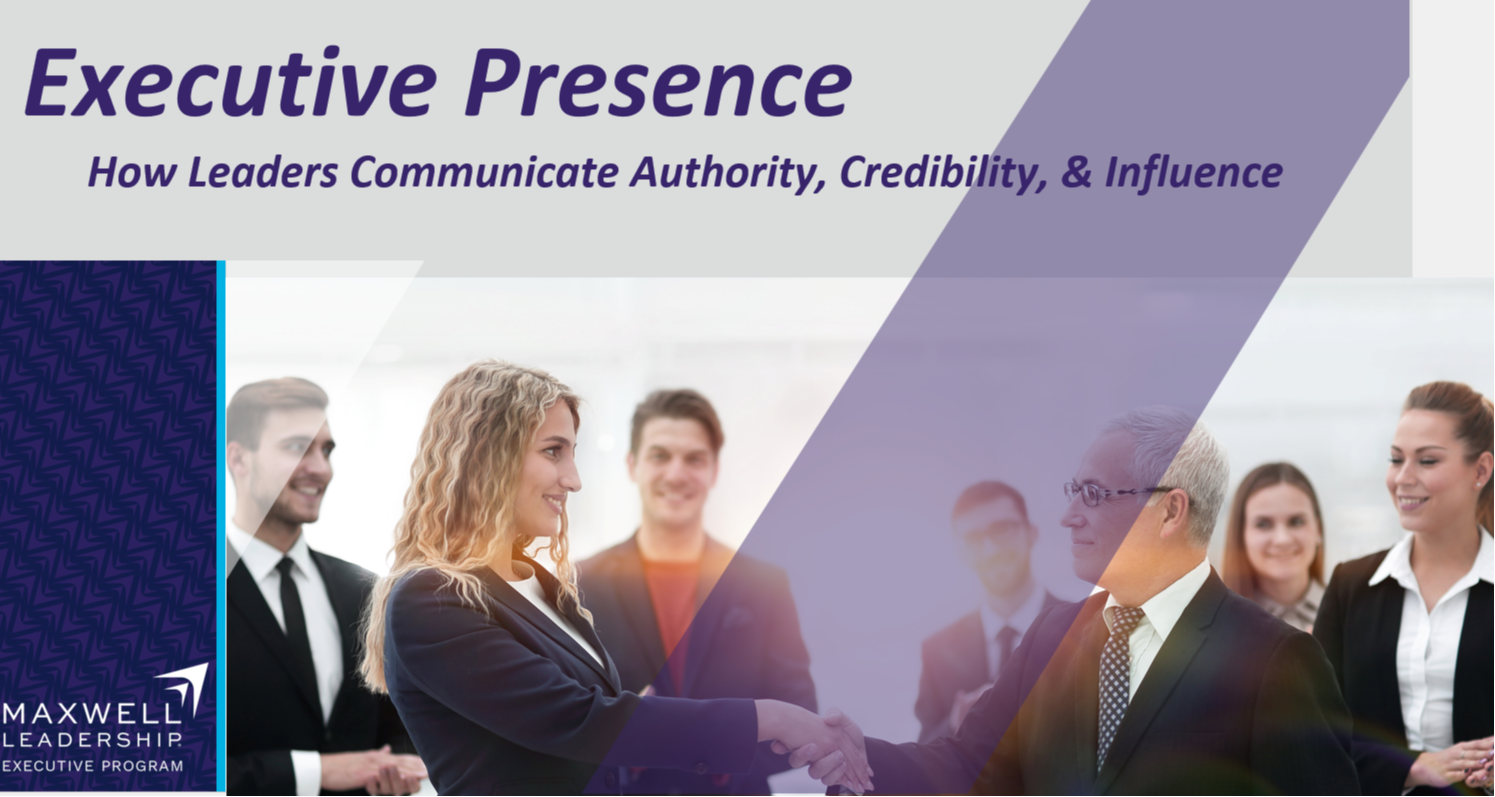
Course overview
Technical competence may earn recognition. Professional presence helps others trust you with greater responsibility.
Professional advancement is influenced by more than technical competence and consistently good performance.
As responsibilities grow, people are increasingly evaluated on how they communicate, respond under pressure, contribute in meetings, build trust and influence others. This becomes especially important when professionals begin leading teams, engaging senior stakeholders or preparing for promotion.
Executive and Professional Presence is a practical full-day workshop designed for current leaders and professionals preparing for their next level of responsibility.
The workshop helps participants become more intentional about how others experience them—through their behaviour, communication, composure and overall professional presentation.
Executive presence is not reserved for executives, extroverts or naturally charismatic people. It is a collection of observable behaviours that can be understood, practised and strengthened.
Workshop Objective
The objective of this workshop is to help participants strengthen the professional behaviours and leadership signals that build trust, credibility and influence.
Participants will be encouraged to:
- understand what executive and professional presence means in practice
- recognise how others may currently experience their leadership
- become more aware of the signals they communicate through words, behaviour and appearance
- project confidence without arrogance
- remain composed and credible under pressure
- communicate with greater clarity, brevity and authority
- strengthen verbal and non-verbal communication
- balance decisiveness with humility and openness
- develop greater self-awareness and emotional control
- prepare more intentionally for expanded leadership responsibility; and
- create a focused personal presence-development plan.
Full-Day Workshop Outline
1. Understanding Executive and Professional Presence
Participants explore what professional presence is—and what it is not.
The session challenges common assumptions that presence depends on:
- seniority
- personality
- charisma
- age
- job title or
- natural confidence.
Instead, participants consider how presence is experienced through consistent and intentional behaviour.
2. How Others Experience Your Presence
Participants reflect on the leadership signals they currently send in meetings, conversations and high-pressure situations.
This includes considering whether others experience:
- clarity or confusion
- confidence or uncertainty
- calmness or tension
- trust or hesitation
- openness or defensiveness, and
- direction or unnecessary complexity.
The focus is not on creating an artificial image, but on aligning intention with impact.
3. Moving from Automatic to Intentional Leadership
Professionals often operate from habits they have developed over time.
Participants explore how greater self-awareness can help them move beyond automatic reactions and become more deliberate about how they:
- enter a room
- contribute to a discussion
- respond to challenge
- make decisions
- listen to others, and
- manage their emotional signals.
4. The Foundations of Professional Presence
The workshop introduces three broad dimensions that shape how people are experienced:
How We Act
The behaviours that communicate confidence, judgement, credibility and composure.
How We Speak
The verbal and non-verbal communication that influences whether others understand, trust and engage with the message.
How We Present Ourselves
The professional signals that communicate preparation, role alignment and respect for the context.
These dimensions are explored at a practical level without prescribing one personality type or leadership image.
5. Developing Gravitas
Participants consider the behaviours that help a professional carry appropriate authority and credibility.
This includes:
- confidence without arrogance
- calmness under pressure
- credibility and consistency
- clear decision-making
- humility and teachability
- emotional steadiness, and
- sound judgement.
The emphasis is on becoming a stabilising and trusted presence rather than the loudest person in the room.
6. Strengthening Presence under Pressure
Leadership presence is often tested most clearly during uncertainty, conflict or high-stakes conversations.
Participants reflect on how they respond when:
- challenged unexpectedly
- receiving criticism
- dealing with conflict
- making difficult decisions
- presenting to senior leaders
- addressing a mistake
- managing strong emotions or
- working without complete information.
The session encourages participants to replace impulsive reactions with more considered and constructive responses.
7. Communicating with Clarity and Authority
Participants explore how to communicate ideas in a way that is focused, confident and easy to follow.
Attention is given to common communication habits that may weaken professional presence, including:
- overexplaining
- excessive justification
- speaking without a clear point
- filling every silence
- relying too heavily on technical detail
- using unnecessary jargon, and
- failing to adapt the message to the audience.
The aim is to help participants communicate with appropriate clarity, brevity, intention and confidence.
8. The Professional Voice
Participants explore how vocal delivery affects the way a message is received.
The session considers the intentional use of:
- projection
- pitch
- pace
- pause
- tone, and
- emphasis.
A practical activity helps participants experience how small changes in vocal delivery can strengthen clarity, confidence and engagement.
9. Non-Verbal Leadership Signals
Participants reflect on the messages communicated before and beyond their words.
The emphasis is on becoming more congruent and intentional, rather than adopting rehearsed or unnatural behaviour.
10. Professional Image and Role Alignment
Appearance is considered as one component of professional presence—not as a measure of personal worth or leadership ability.
Participants reflect on how presentation may communicate:
- preparation
- professionalism
- attention to context
- respect for the audience
- personal confidence, and
- readiness for increased responsibility.
The discussion remains inclusive and context-sensitive, recognising differences in role, culture, work environment and personal style.
11. Presence, Charisma and Authenticity
The workshop distinguishes between charisma and professional presence.
Participants explore how presence can be developed by people with different personalities and communication styles.
The aim is not to imitate someone else’s leadership style, but to strengthen credibility, composure and influence in a way that remains authentic.
12. Preparing for the Next Level
Participants apply the learning to situations they may encounter as their responsibilities expand.
This may include:
- leading former peers
- facilitating meetings
- engaging clients
- representing the team
- presenting recommendations
- delegating work
- giving feedback
- influencing without formal authority
- interacting with partners or executives, and
- demonstrating readiness for promotion.
The focus is on beginning to display next-level leadership behaviours before the title is formally awarded.
13. Personal Executive Presence Development Plan
Participants conclude the workshop by identifying:
- a strength they can leverage
- a behaviour that may currently weaken their presence
- one communication skill to strengthen
- one habit to practise consistently
- a situation in which they will apply the learning and
- a practical way to gather feedback and monitor progress.
The Workshop Experience
This full-day workshop may include:
- facilitated leadership learning;
- guided self-reflection
- workplace scenarios
- individual and small-group discussion
- communication practice
- vocal-delivery exercises
- observation of verbal and non-verbal signals
- application to promotion and leadership situations
- peer insight and feedback, and
- the development of a personal action plan.
Who Should Attend?
This workshop is suitable for:
- partners, directors and executives
- senior managers and managers
- supervisors and team leaders
- newly promoted professionals
- high-potential employees
- professionals preparing for promotion
- employees beginning to lead or supervise others
- client-facing professionals
- project and engagement leaders
- technical specialists seeking greater organisational influence and
- anyone whose next career step requires stronger leadership visibility, credibility and communication.
What Participants Will Take Away
Participants will leave with:
- a practical understanding of executive and professional presence
- greater awareness of how others may currently experience them
- insight into behaviours that strengthen or weaken credibility
- practical strategies for remaining composed under pressure
- greater confidence in meetings and professional conversations
- improved awareness of verbal and non-verbal communication
- a clearer understanding of promotion-readiness signals
- greater ability to communicate with focus and authority
- a more intentional approach to professional presentation, and
- a personalised development plan for strengthening their presence.
Presence Begins before the Promotion
You do not need to wait for a senior title before developing the behaviours associated with trusted leadership.
Professional presence grows as people become more intentional about how they communicate, respond, contribute and lead—especially when the stakes are high.
Strengthen how you show up. Build the trust to lead. Demonstrate readiness for what comes next.
Got any questions? You are welcome to contact Lynette Berger at [email protected]